Dr.RahulTandon is a well-known figure in plastic surgery. Having 25 years of experience in Plastic Surgery and operated more than 5000 cases is the most sought after Plastic and Cosmetic surgeon not only in Prayagraj but most the surrounding areas.
Dr.RahulTandon is a well-known figure in plastic surgery. Having 25 years of experience in Plastic Surgery and operated more than 5000 cases is the most sought after Plastic and Cosmetic surgeon not only in Prayagraj but most the surrounding areas.
Your breasts often change over time, losing their youthful shape and firmness. Pregnancy, nursing, weight gain and loss, aging and gravity can cause breasts to soften and sag. Women who are unhappy with the shape, volume and/or firmness of their breasts may consider having breast lift surgery, also called mastopexy.
A mastopexy raises and firms the breasts by removing excess skin and tightening the surrounding tissue to reshape and support the new breast.
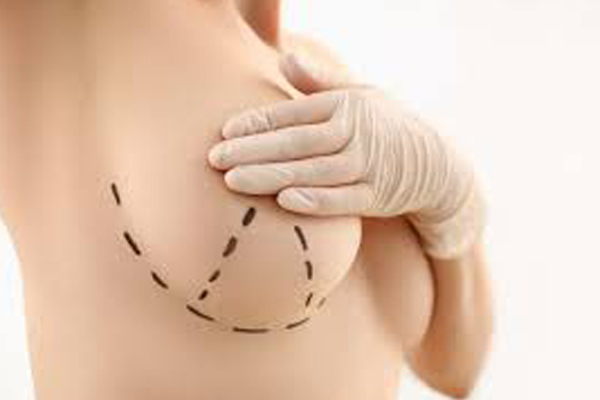
One can see the level of drooping herself by a simple pencil test as shown in figure.
A breast lift is often combined with breast augmentation surgery to increase both the firmness and size of the breasts.
Breast lift is a highly individualized procedure achieved through a variety of incision patterns and techniques, which involves removing excess skin and relocating the nipple and areola (the pigmented skin surrounding the nipple). Patients with smaller breasts and minimal sagging may be candidates for a mastopexy procedure that involves smaller incisions than a standard breast lift requires.
To help prepare for a mastopexy we may recommend a baseline mammogram before surgery and another mammographic examination some months after surgery to help detect post-operative changes in your breast tissue.
If you are a smoker, you will be asked to stop smoking well in advance of surgery. You should avoid aspirin and certain anti-inflammatory drugs that can cause increased bleeding for a period of time before surgery. Your plastic surgeon will provide you with additional preoperative instructions.
Breast lift surgery is performed as an outpatient procedure, usually under general anesthesia and typically takes 1 ½ to 2 hours.
The procedure can be achieved through a variety of incision patterns and techniques.
All types of breast lifts require an incision to remove excess skin so that the remaining skin can be repositioned. There are several types of surgery techniques available that differ in the incision made and the procedure used to lift the skin.
Standard breast lift surgery/Anchor incision
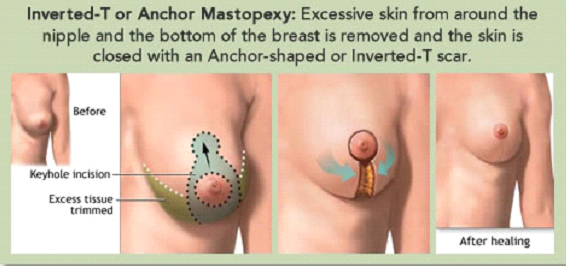
Uses an anchor or keyhole incision, which starts at the base of the breast in the crease and extends upward around the areola – creating an anchor shape. It is most often used for extensive ptosis (drooping), resulting after pregnancy and lactation in the females approaching in their mid 30s.( Figure 2)
It can be combined with an implant if the female is desirous of increasing the size and firmness of the breasts along with drooping position.
Doughnut mastopexy
It is also called a Benelli lift or periareolar lift, is much less invasive than the anchor breast lift procedure because the incision is limited to a circle around the areola. A piece of skin around the areola is removed and the surrounding skin is reattached to create a lifted look with minimal scarring.( Figure 3)
Vertical mastopexy/ Keyhole incision
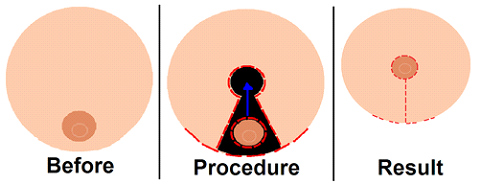
Is a procedure resulting in an incision around the areola and then vertically down the breast. This avoids the horizontal incision under the breast that results from a standard breast lift. (Figure 4)
For the best result, we often recommend combining breast augmentation with breast lift (mastopexy) surgery when there is both surgery of the breasts and a significant loss of volume. The two procedures are generally performed at the same time, although revision surgery may be required for an ideal result.
Though results from your breast lift are immediately visible, breast shape and position continue to settle over the next few months. Incision lines are permanent, but will continue to fade over time.
While the results of your surgery will be long lasting, over time your breasts can continue to change due to aging and gravity. You will be able to retain the results of your mastopexy by maintaining your weight and keeping a healthy lifestyle.