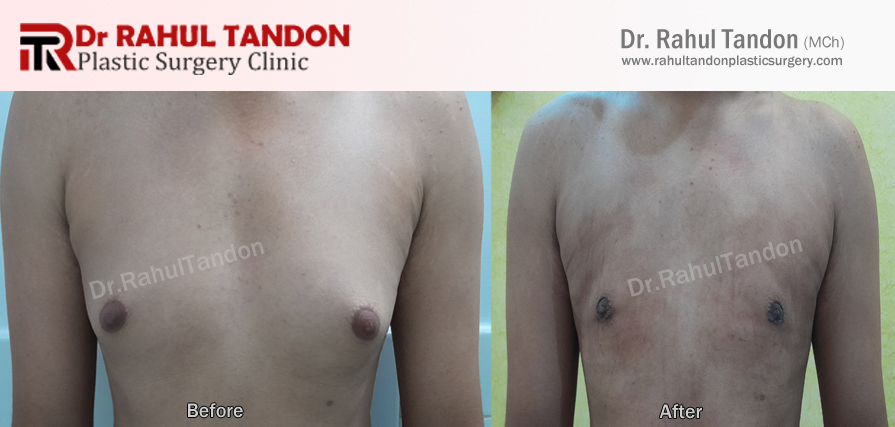
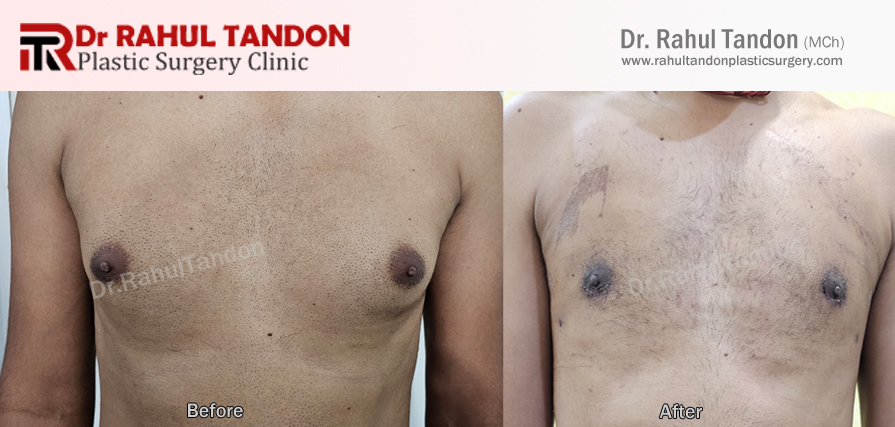
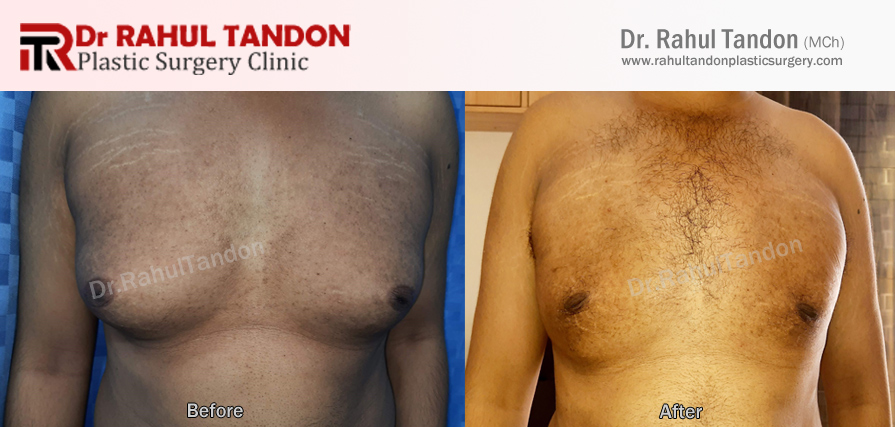
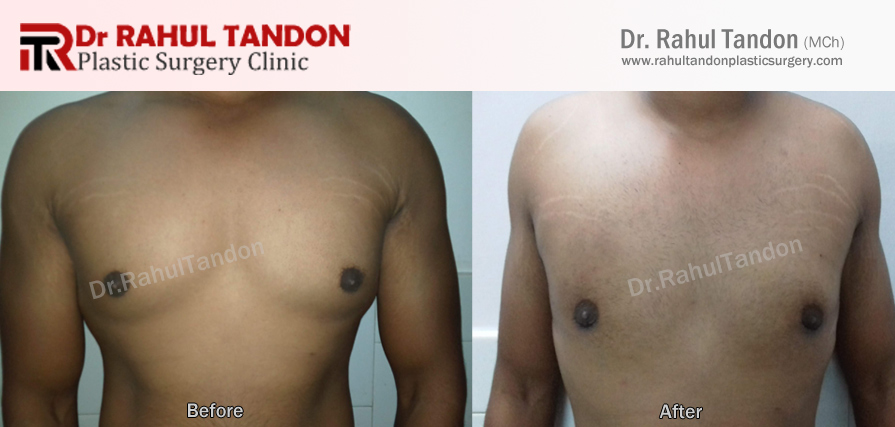
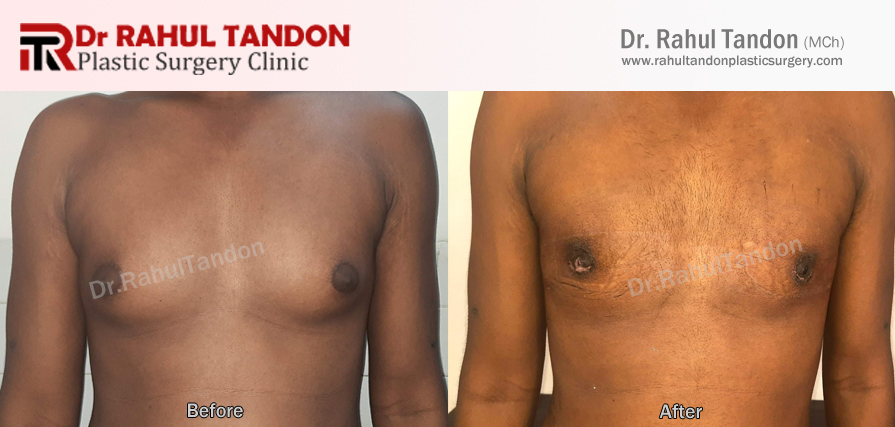
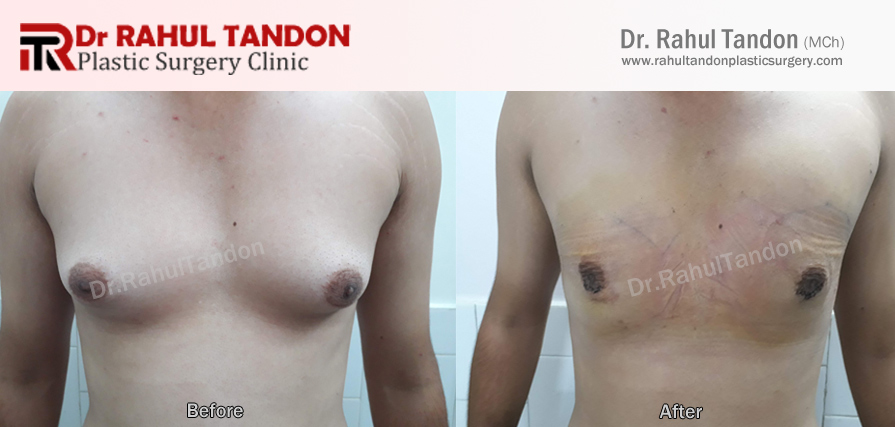
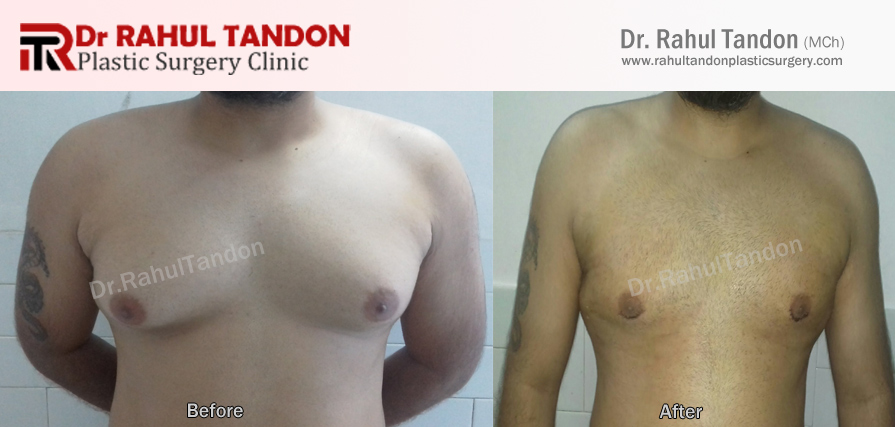
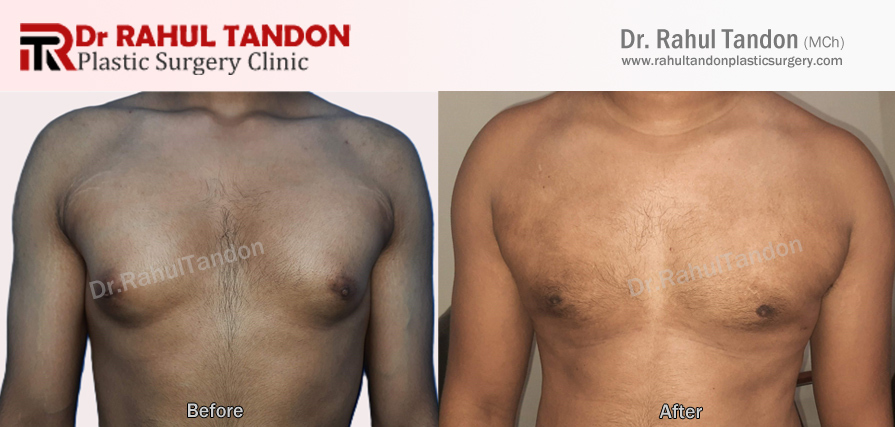
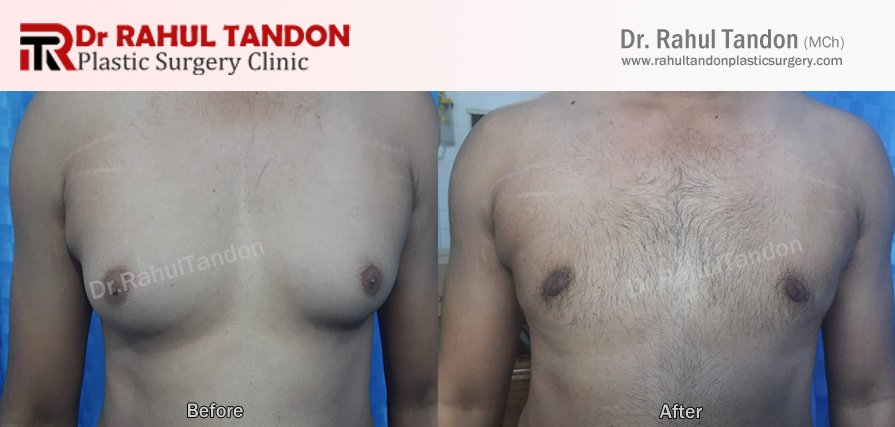
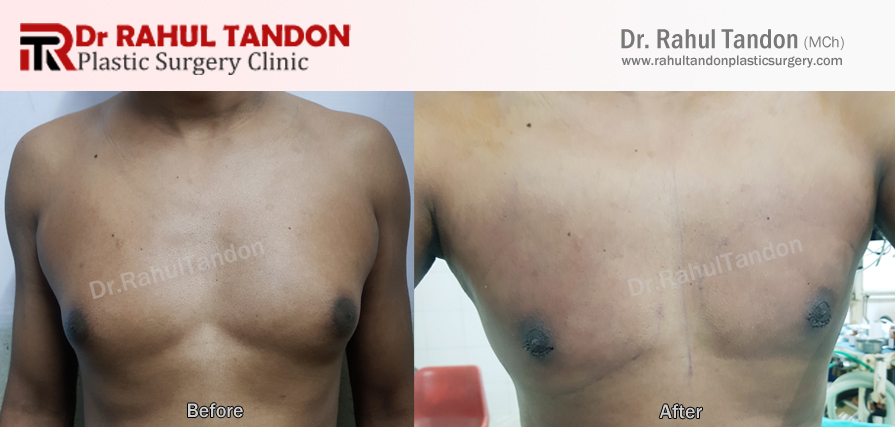
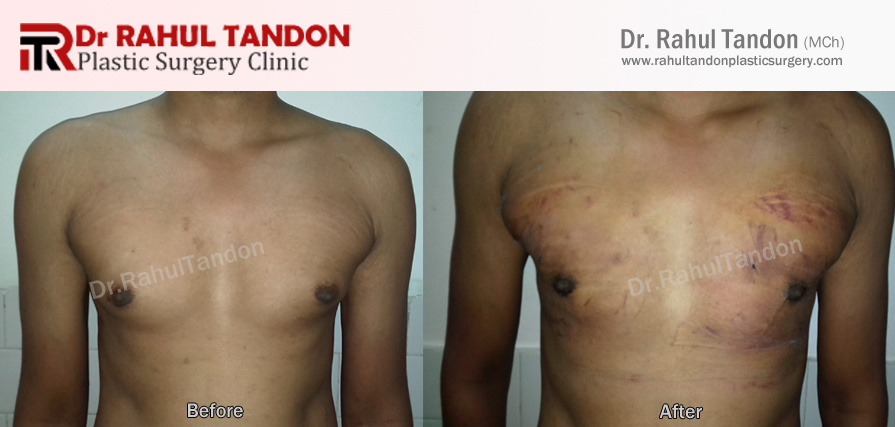
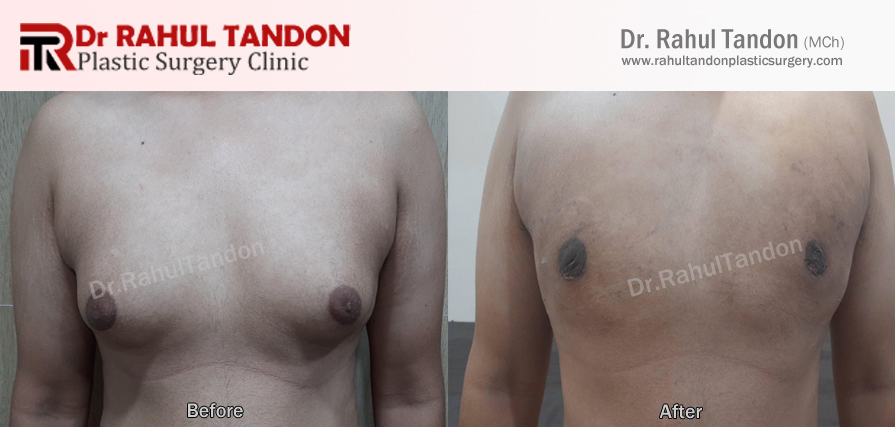
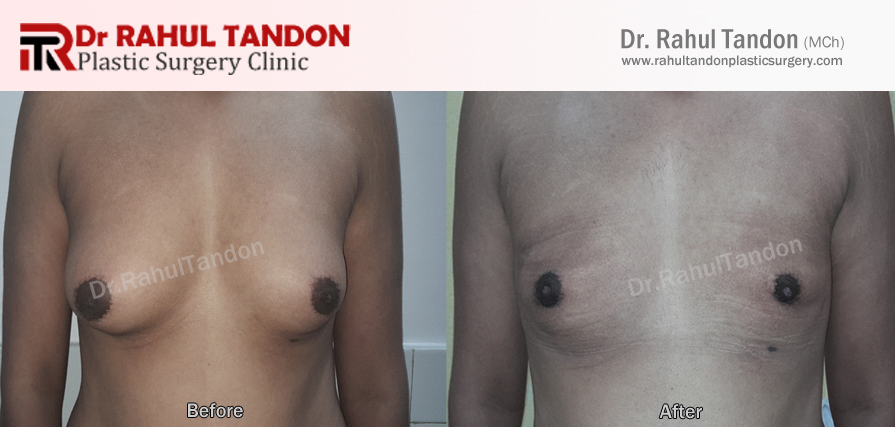
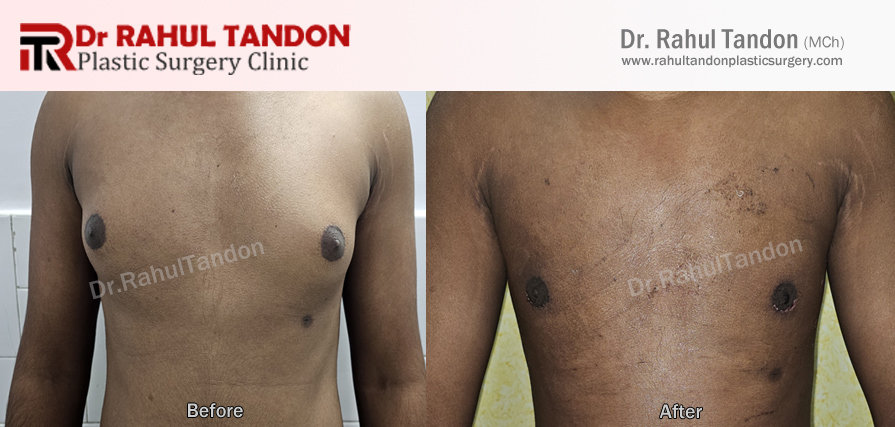
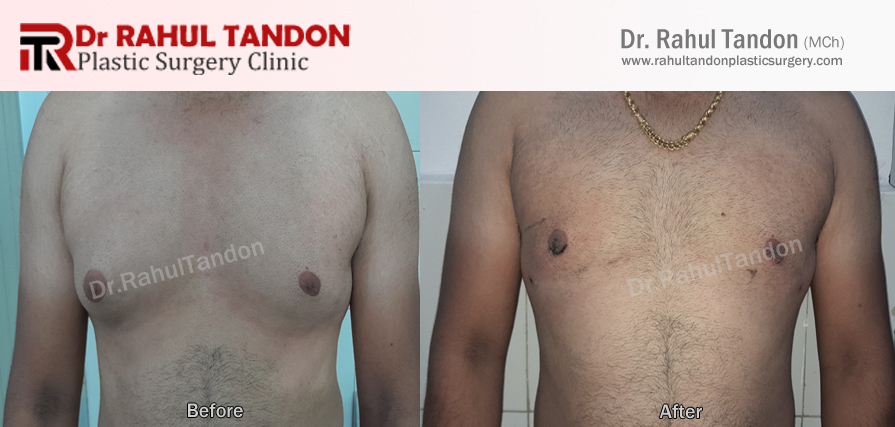
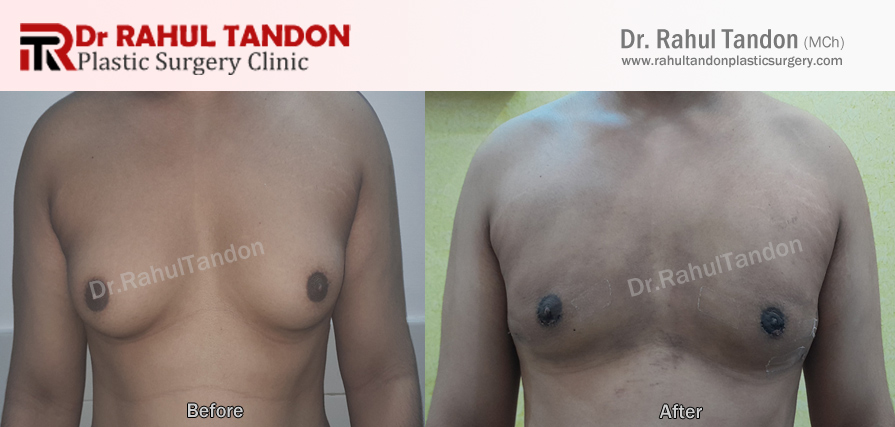
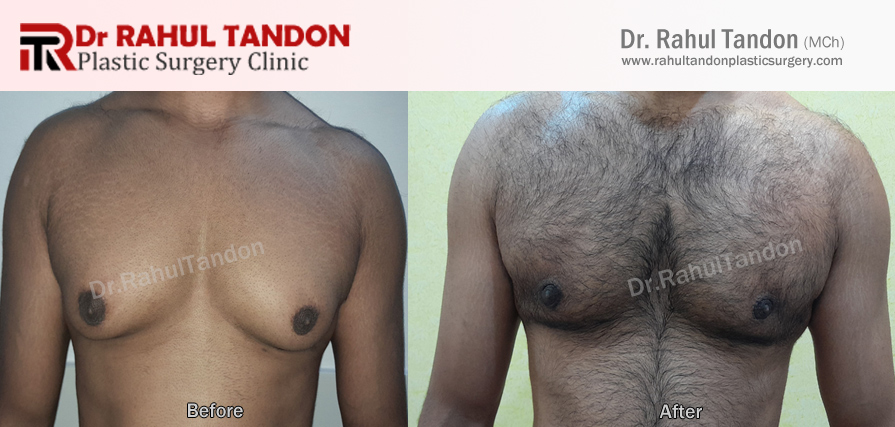
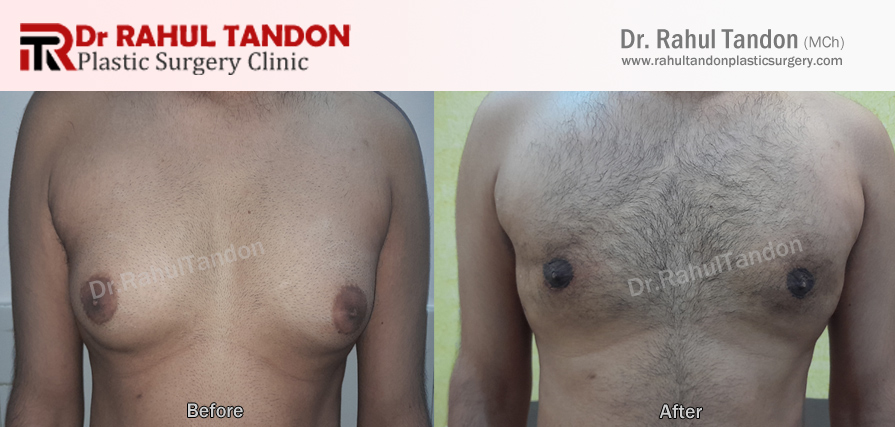
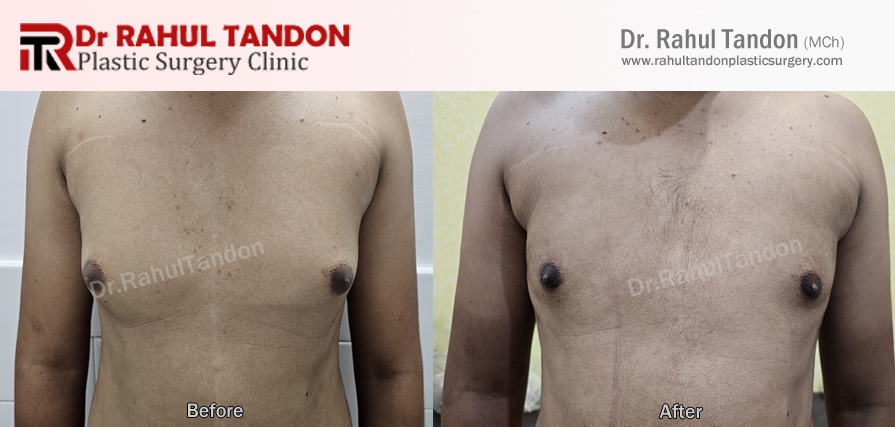
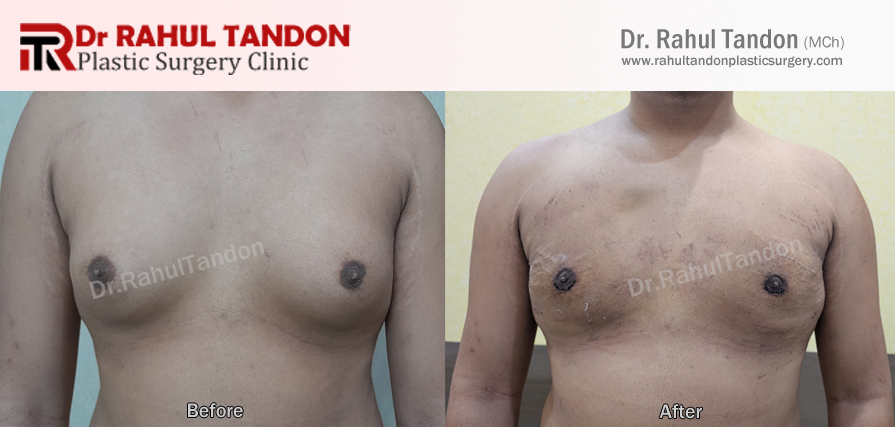
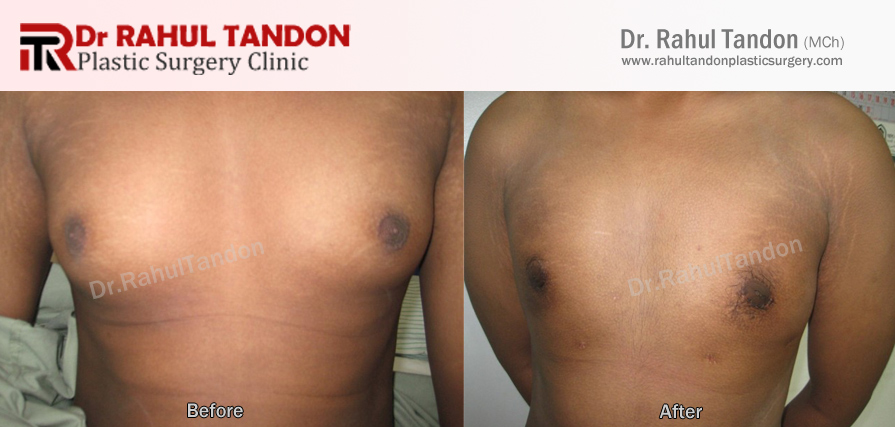
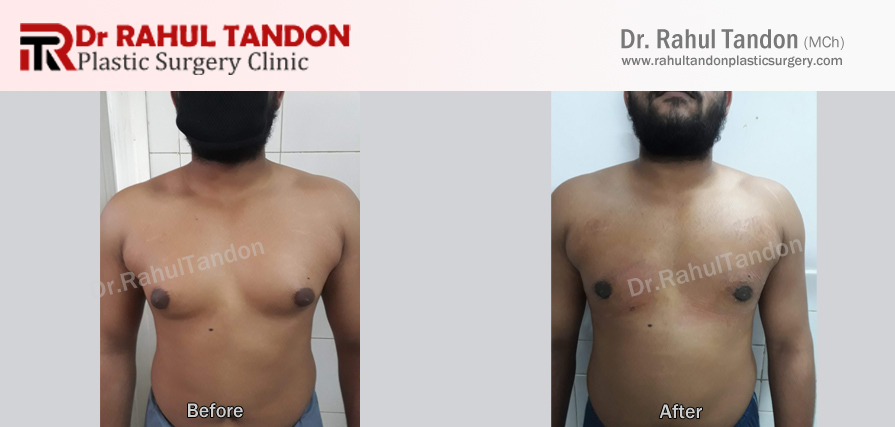
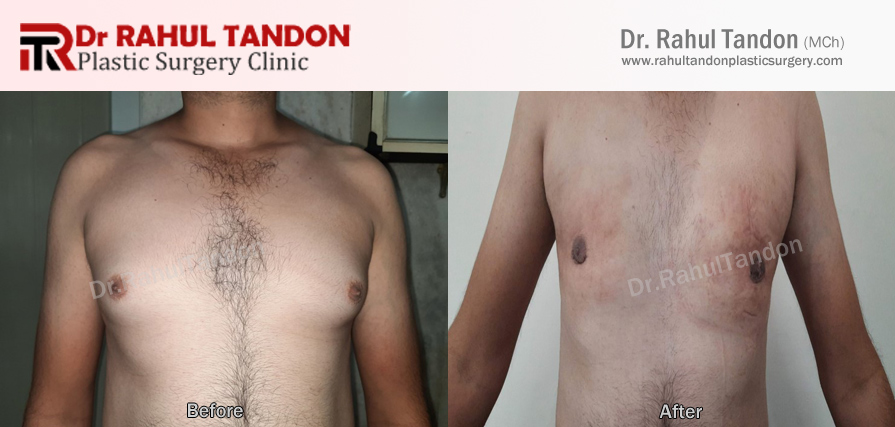
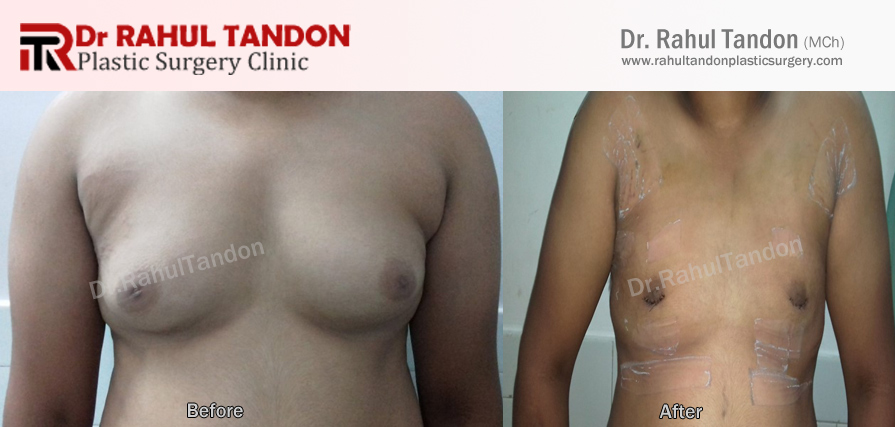
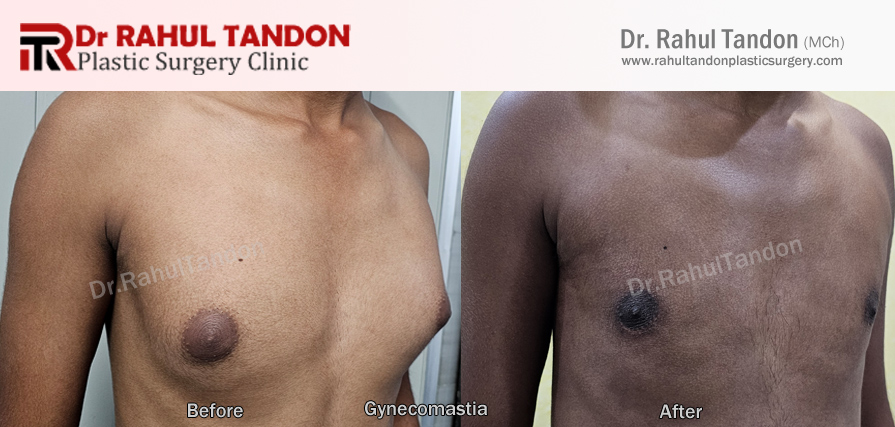
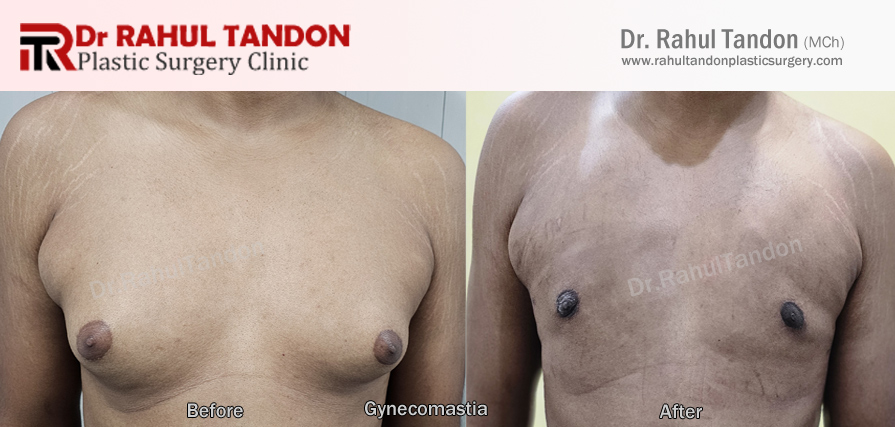
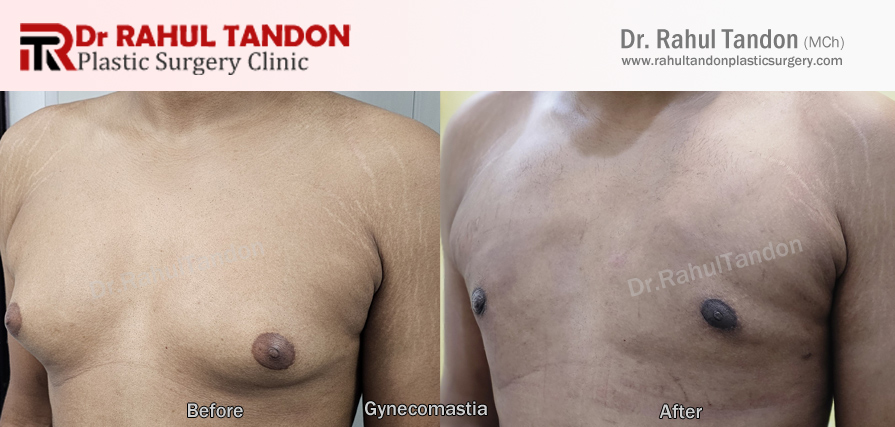
Dr.RahulTandon is a well-known figure in plastic surgery. Having 25 years of experience in Plastic Surgery and operated more than 5000 cases is the most sought after Plastic and Cosmetic surgeon not only in Prayagraj but most the surrounding areas.
Dr.RahulTandon is a well-known figure in plastic surgery. Having 25 years of experience in Plastic Surgery and operated more than 5000 cases is the most sought after Plastic and Cosmetic surgeon not only in Prayagraj but most the surrounding areas.
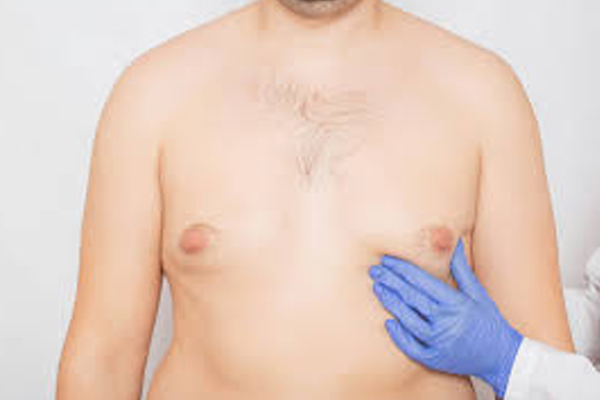
Gynaecomastia (often referred to as ‘man boobs’) is the enlargement of male breast tissue. The condition appears as a rubbery or firm mass that starts from underneath the nipples and then spreads outwards over the breast area. The tissue is enlargement of glandular tissue and is not fat tissue.
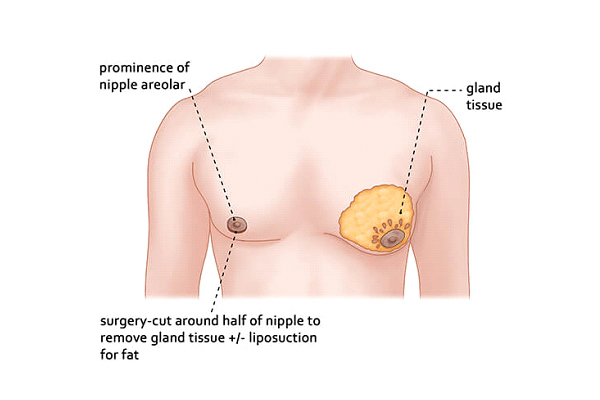
in about half of cases, enlargement is found in both breasts; in the remainder it only affects one breast.
Gynaecomastia can happen in males of any age or weight.
Obese men can appear to have man boobs as they have fat tissue
Gynaecomastia commonly appears during infancy, puberty and older age. All men have the male sex hormone testosterone as well as low levels of the female hormone oestrogen which controls breast tiss
Gynaecomastia is very common in boys going through puberty, happening in more than half of all normal adolescent males, and usually resolves completely.
In older men, enlargement of the breast tissue happens in one to two thirds of men.
Gynaecomastia commonly appears during infancy, puberty and older age. All men have the male sex hormone testosterone as well as low levels of the female hormone oestrogen which controls breast tissue growth.
When the testosterone to oestrogen ratio changes (that is, there is an imbalance in the levels of these two hormones favouring relatively higher amounts of oestrogen), breast tissue can grow. Some men with gynaecomastia have elevated oestrogen levels.
Gynaecomastia is common during mid to late puberty as more oestrogen than testosterone is produced by the maturing testis before testosterone production by the testes ‘kicks in’ and reaches adult levels.
Gynaecomastia appearing during puberty often goes away, and less than one in 20 affected adolescent boys have gynaecomastia that continues into adulthood.
In older men, the gradual decrease in testosterone production (and therefore increase in oestrogen relative to testosterone) seen with ageing can lead to gynaecomastia.
As well as the natural hormone changes that happen in with puberty and ageing, gynaecomastia can also be caused by genetic problems, chronic diseases (especially kidney and liver) or various drugs.
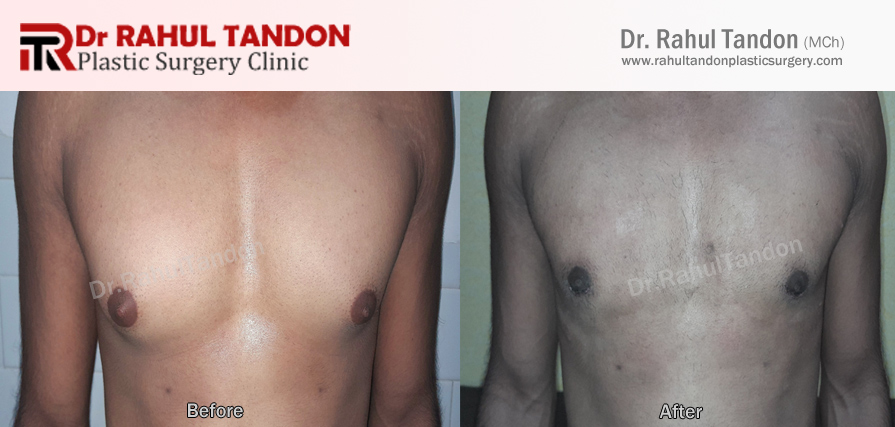
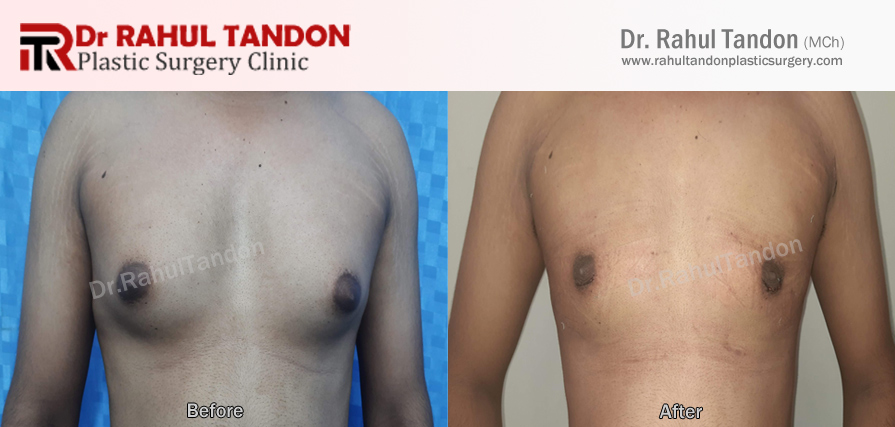
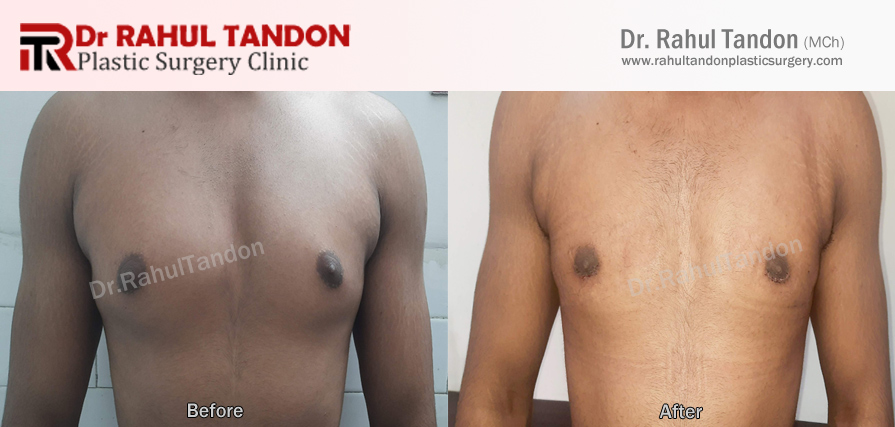
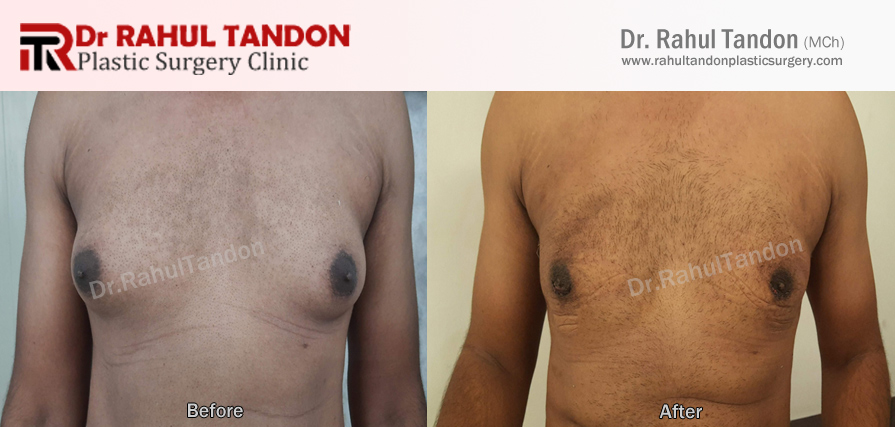
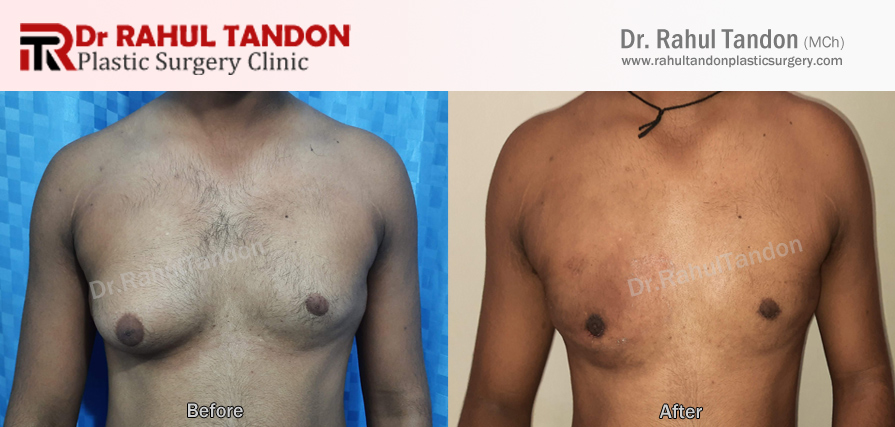
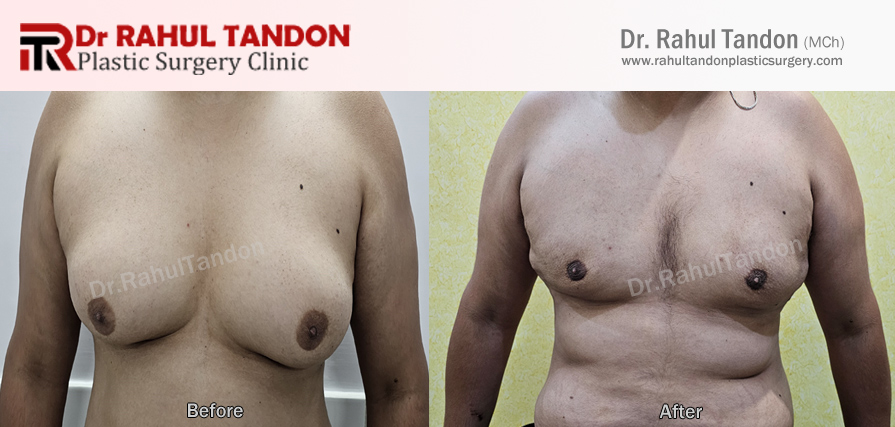
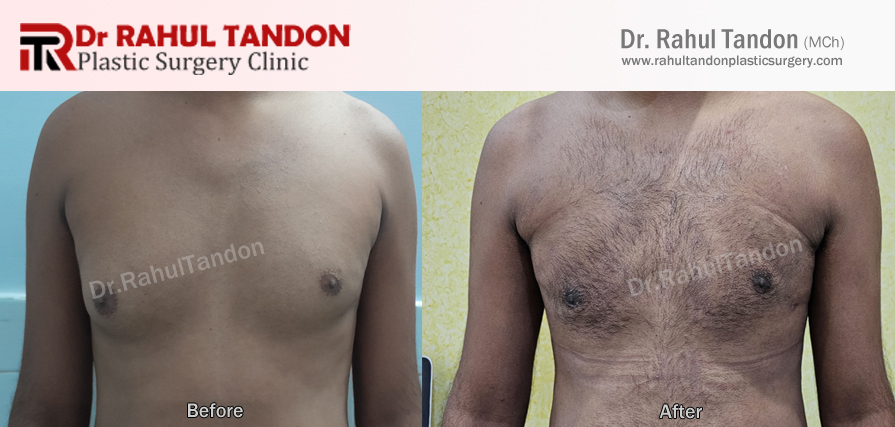
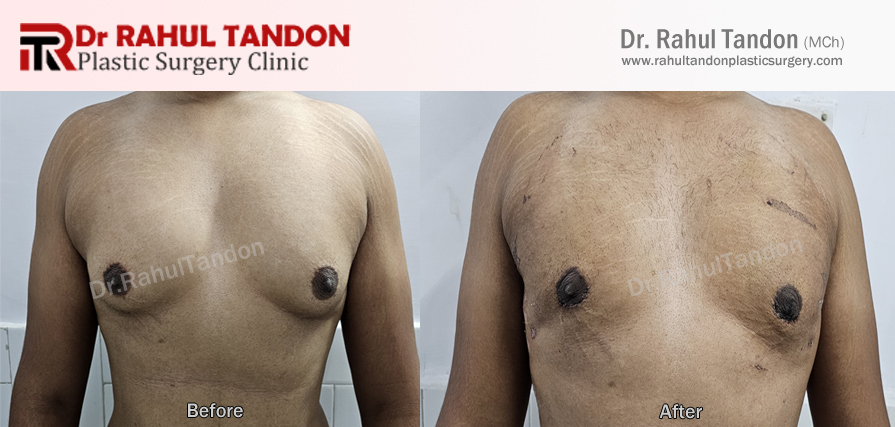
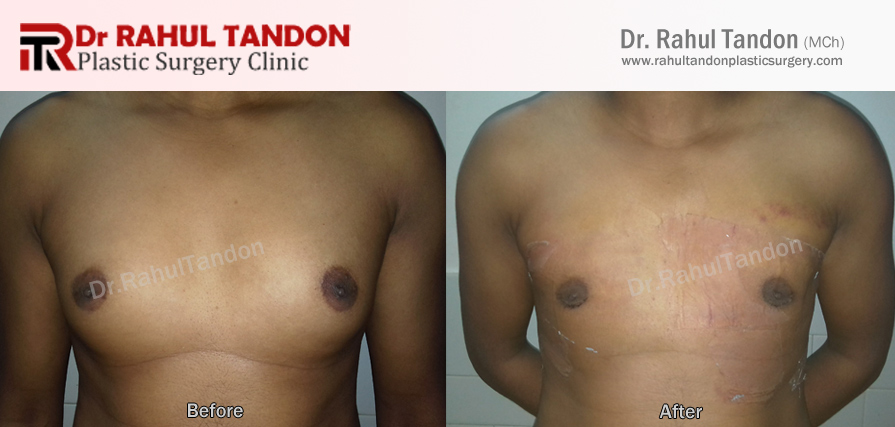
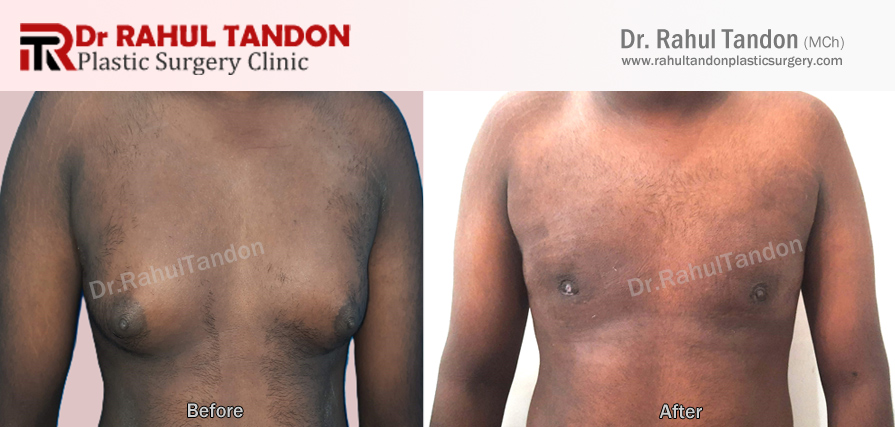
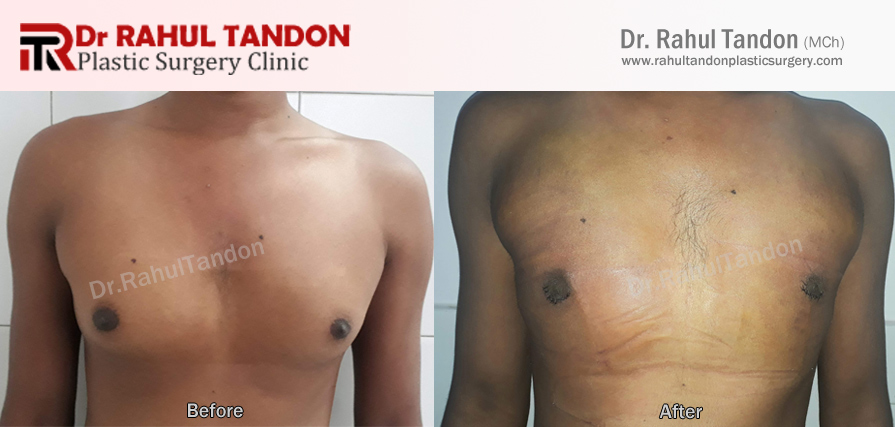
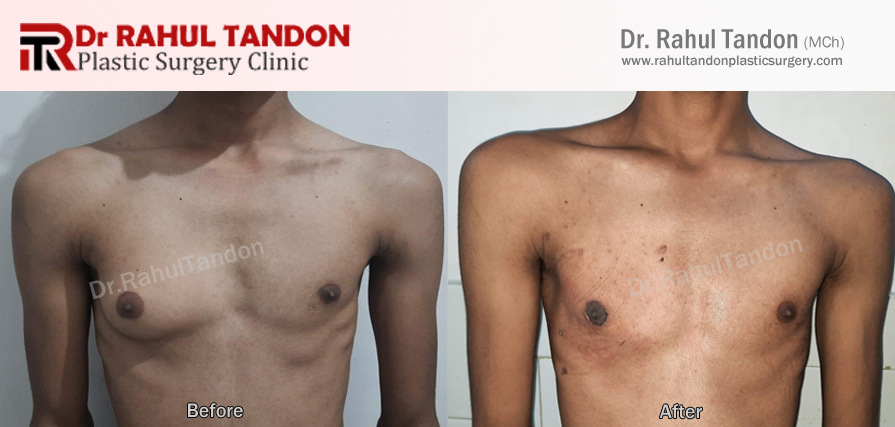
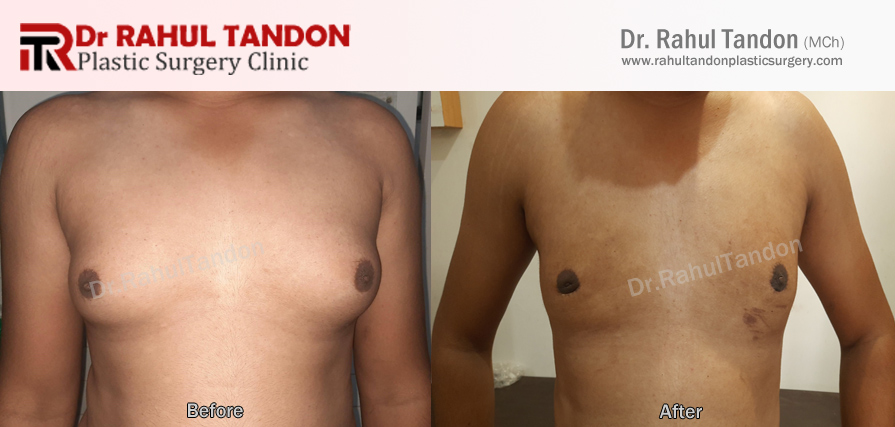
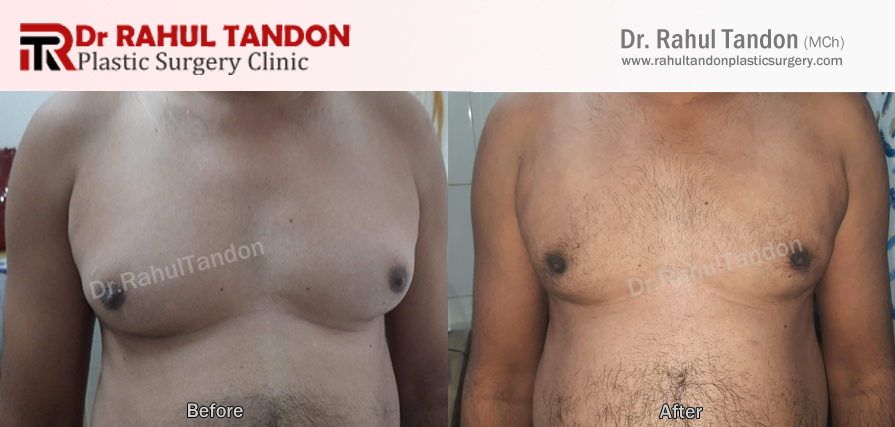
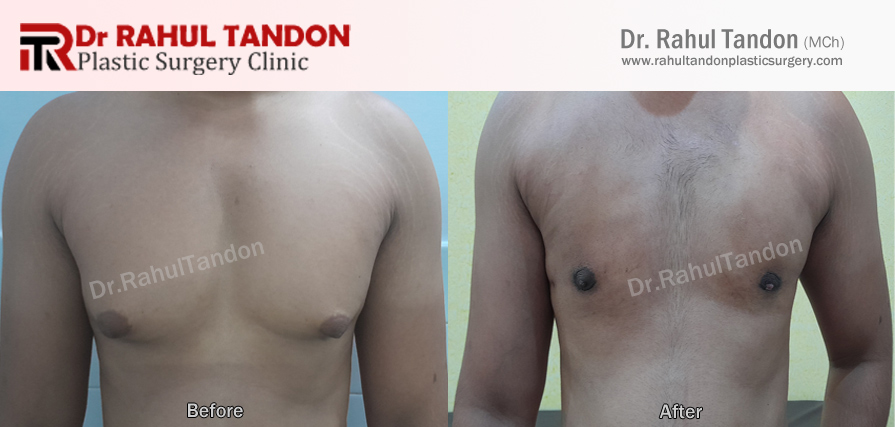
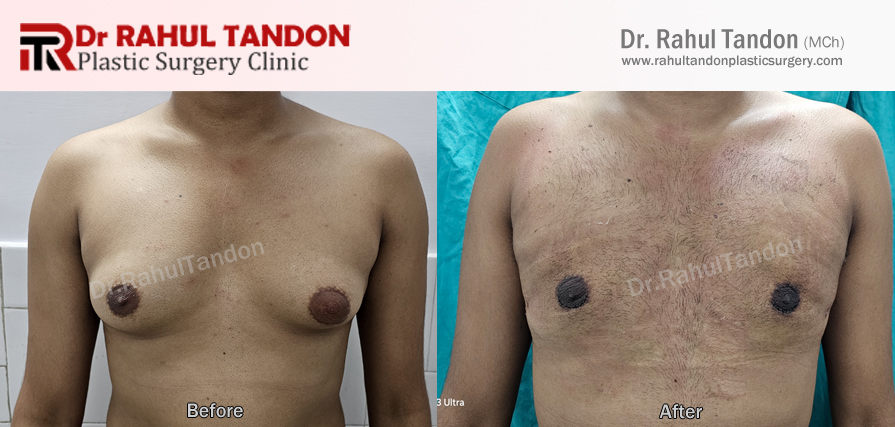
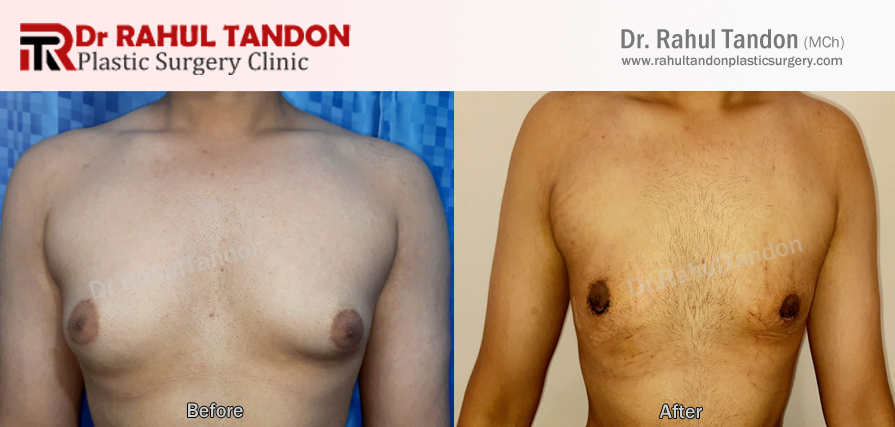
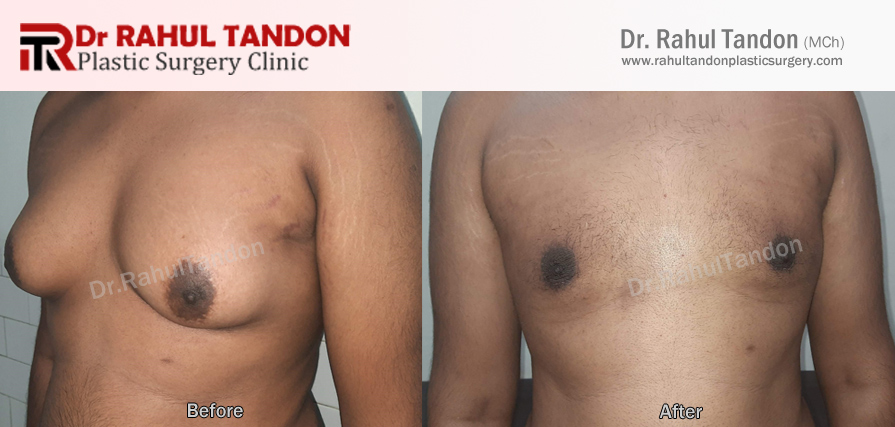
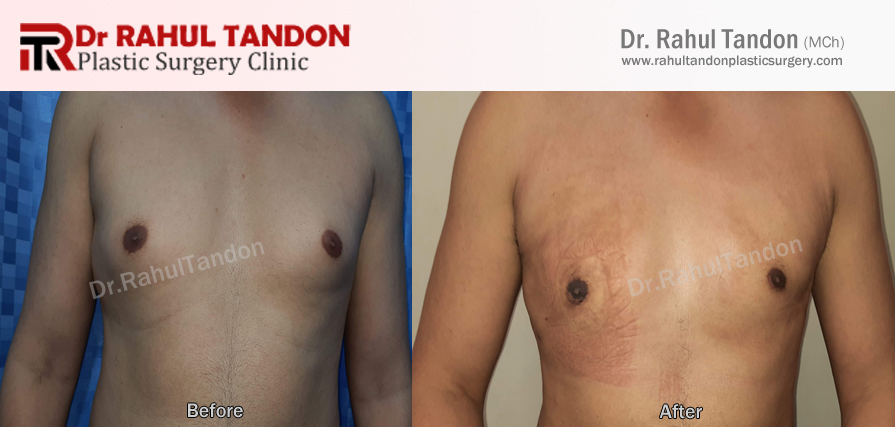
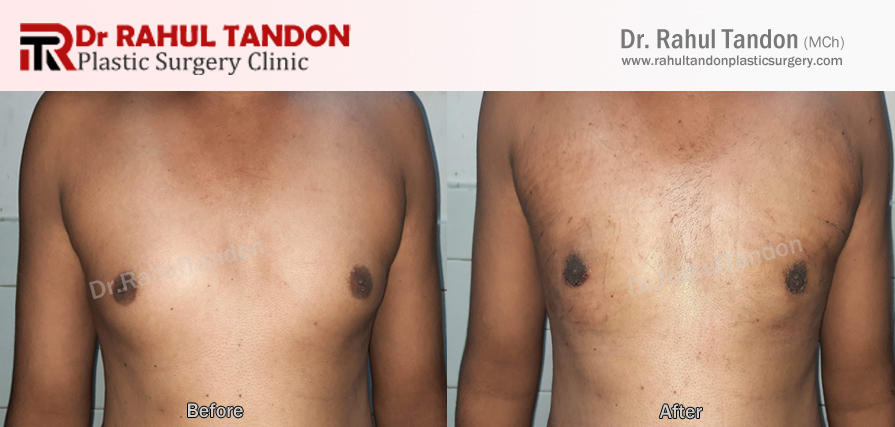
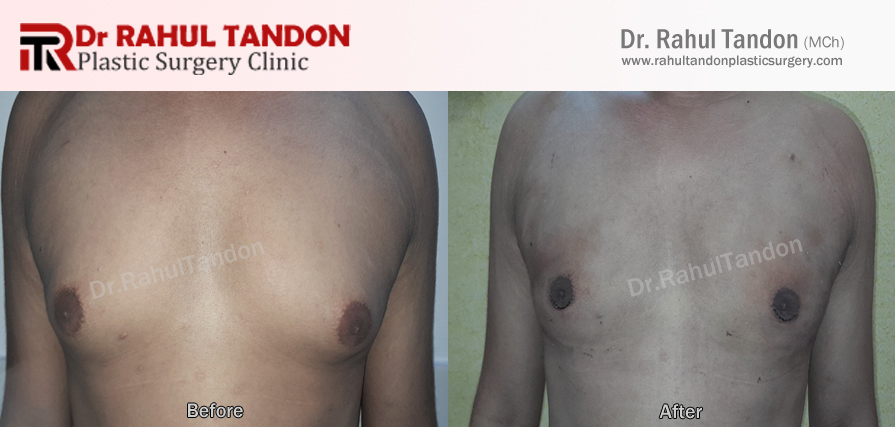
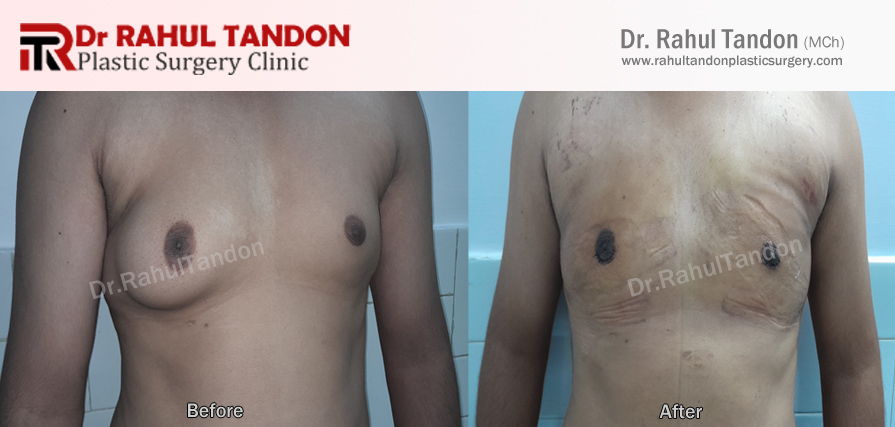
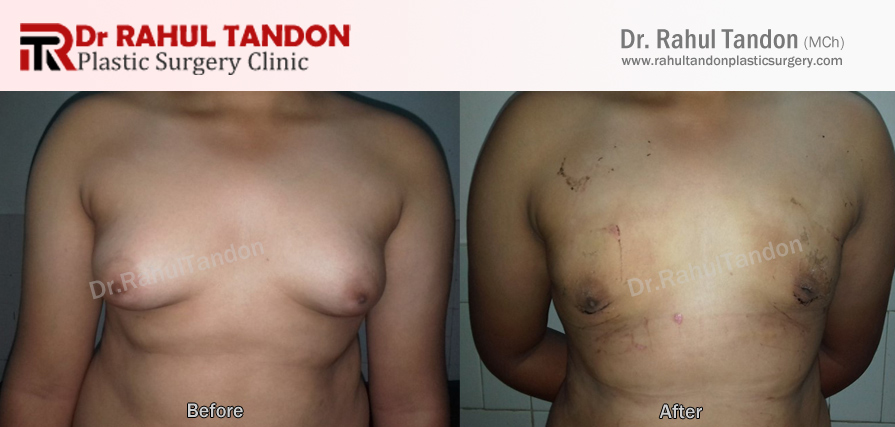
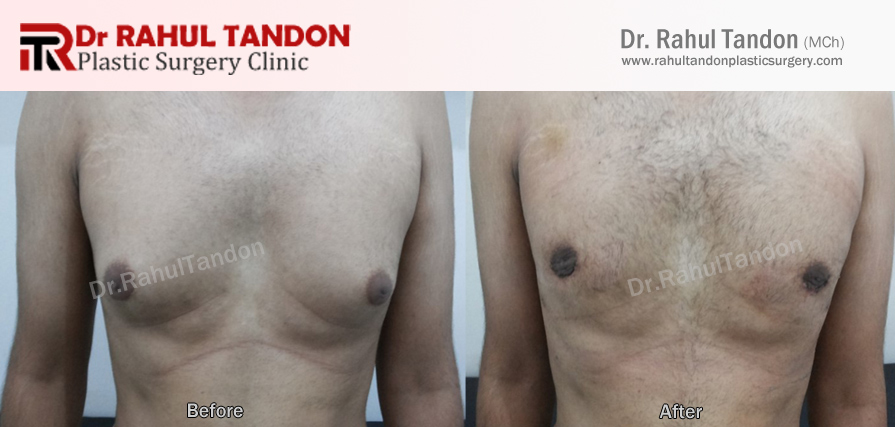
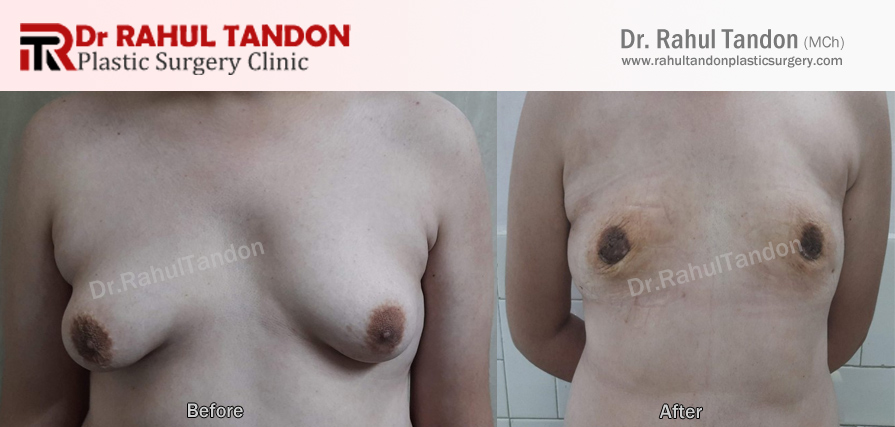
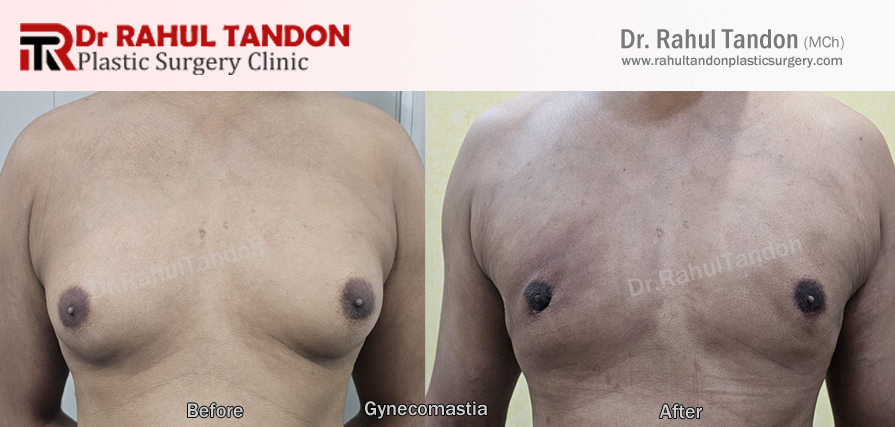
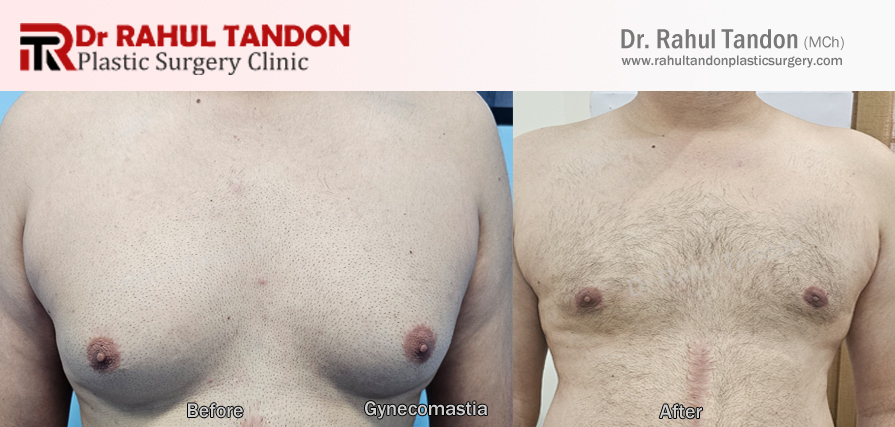
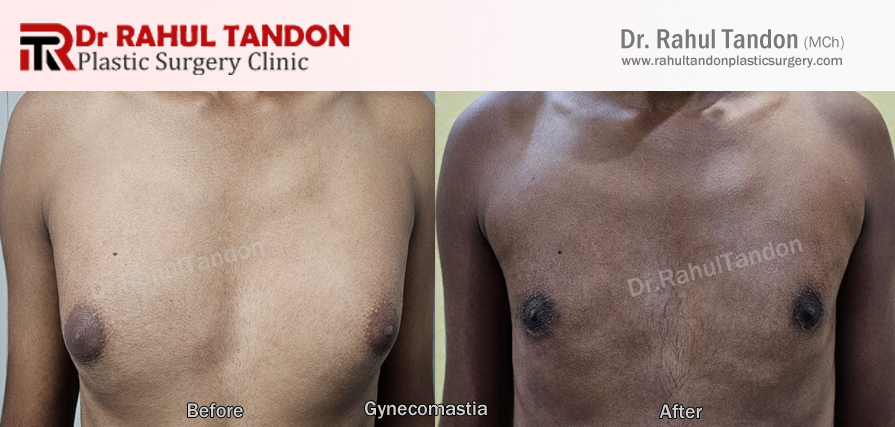
One may consider a male chest reduction
The procedure will create a flatter chest with a more masculine male contour.