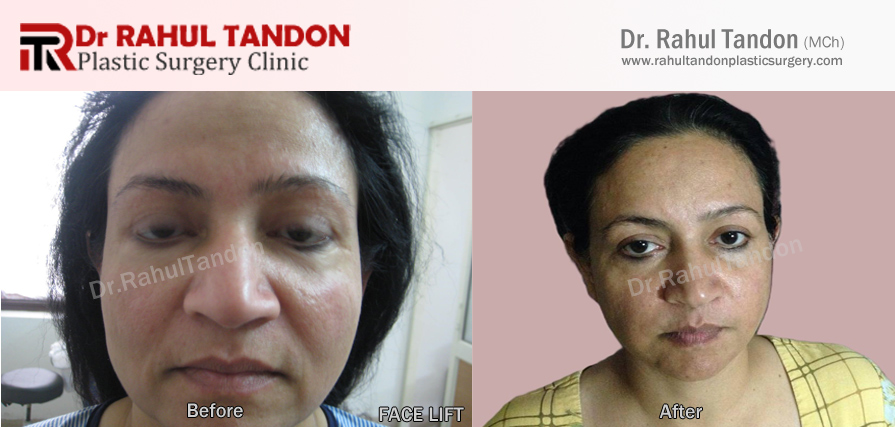
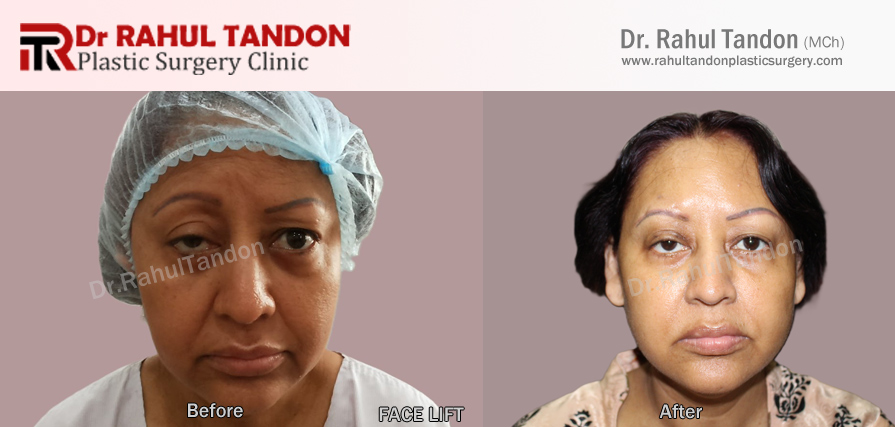
Dr.RahulTandon is a well-known figure in plastic surgery. Having 25 years of experience in Plastic Surgery and operated more than 5000 cases is the most sought after Plastic and Cosmetic surgeon not only in Prayagraj but most the surrounding areas.
Dr.RahulTandon is a well-known figure in plastic surgery. Having 25 years of experience in Plastic Surgery and operated more than 5000 cases is the most sought after Plastic and Cosmetic surgeon not only in Prayagraj but most the surrounding areas.
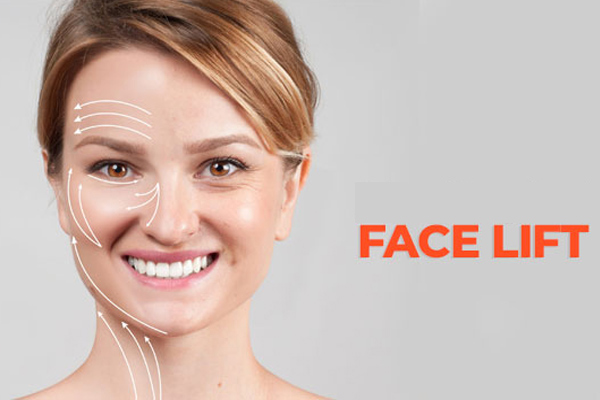
There are several different types of facelifts you can choose from based on your aesthetic goals and preferences regarding downtime and recovery, the risks involved as well as your facial anatomy. As a general rule, the different types of facelifts vary by the type of incision, number of tissue layers treated, the area of the face that is targeted, and their degree of invasiveness.
When surgeons first began performing facelift surgery, they cut the skin on the face and pulled it back. This so-called "skin only" technique wasn't exactly reliable, nor did it offer the best aesthetic results. The skin kept falling because there was no scaffolding to support its new, higher position. Over time, surgeons honed their craft by going deeper into the facial tissues, and the modern facelift took shape.
Some of the more popular facelift types are:
The Deep Plane Lift
The deep plane lift is considered the gold standard. It involves lifting, releasing and repositioning the superficial musculoaponeurotic system (SMAS). In short, the SMAS layer is located underneath the skin and surrounds the muscles of facial expression; that is, the muscles used for smiling, frowning, and other facial expressions. The deep plane lift has been shown through peer-reviewed studies to offer longer-lasting results with fewer revisions.
This more technical procedure involves inconspicuous incisions along the hairline so that the facial muscles and upper fatty tissue layers can be easily lifted and repositioned. From the hair-bearing temple area, the incisions are extended downward along natural creases, proceeding inside the ear, then along the ear lobe, and ending out of sight behind the ears.
During the deep plane lift, the facial plastic surgeon separates the skin from the SMAS layer, and then enters the "deep plane" by going underneath the SMAS layer to release attachments. It is the release of these attachments that allows the surgeon to reposition the SMAS layer, and accompanying skin, in a more youthful, natural, and tension-free position. After the SMAS is repositioned, excess and loose skin is removed, and the edges are sutured or stapled in place.
The deep plane lift is the go-to lift for people with severe facial sagging and laxity, and for those looking for a longer-lasting lift. The results of deep plane lifts are dramatic, especially in the mid-face area (the cheeks, nasolabial folds, jawline and chin). The effects last about 10 to 15 years. For information on facelift risk(s), visit our page devoted to this topic.
The SMAS Lift
The SMAS lift affects the superficial top layers of skin and the deeper tissues of the face and neck. These tissues tend to grow lax and sag with use and advancing age.
To perform a SMAS lift, your facial plastic surgeon creates an incision at the temple, above your hairline. From there the incision is extended downward, following your skin's natural crease in front of or at the edge of the ear, below the ear lobe and behind your ear. The SMAS is then tightened using sutures, any excess or redundant skin is removed and the remaining skin is stitched up.
The SMAS lift works well for individuals with mild laxity, some jowls and mid-face sagging. There are several popular SMAS lift techniques, some more reliable than others. The length of surgery time (and recovery), placement of incisions, revision rates, and overall results differ amongst the many techniques and with the surgeons who employ them. The SMAS lift differs from a deep plane lift in that no attachments underneath the SMAS are released.
Short Scar Lifts
The short scar facelift is an umbrella term for several facelifts that involve abbreviated scars. One such lift involves an S-shaped incision at the temple or in front of the ear. Unlike with other types of facelifts, the short scar lift incision does not extend behind the ear. Your surgeon can still re-suspend the tissues that support your smile lines and jowls and tighten a moderate amount of your loose skin.
Another example of a short scar lift is the minimal access cranial suspension lift (MACS). With this technique, your incision stops right at your ear lobe.
Short scar lifts, whether the S-shaped or the MACS, may be options for people in their 40s and 50s with minimal to moderate excess skin. This procedure is also ideal if a shorter scar is a priority, or if you have no visible signs of aging on your neck.
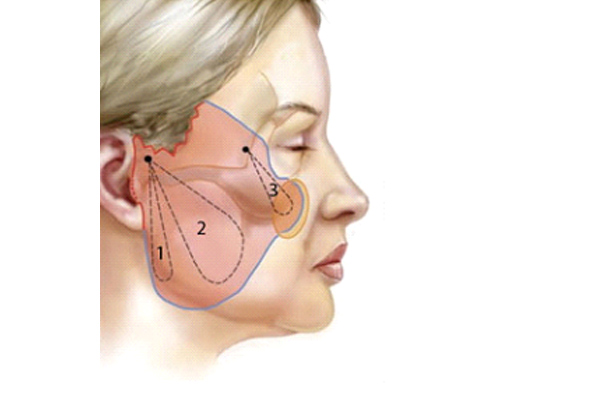
The Midface or Cheek Lift
These lifts target the middle third of your face. The incisions are placed in your hairline and the inside of your mouth. Your surgeon then lifts and repositions the natural fatty layer over your cheekbones.
Midface lifts improve nose-to-mouth lines and lift sagging cheeks. This area can also be treated with an SMAS or deep plane lift. An isolated mid-facelift can be done endoscopically or through the lower lid along with eyelid surgery (blepharoplasty). This lift provides a subtle freshening-up with minimal risk and downtime.